
Atchison Criminal Court Records
A criminal court record is the court case file, not just the arrest label. In Atchison County, state-law criminal cases are handled through the District Court, which is part of Kansas's trial court system. The file can include a complaint or information, formal charges, bond entries, first appearance or arraignment, plea, diversion activity, motions, hearing settings, orders, verdict or plea, disposition, sentence, probation orders, warrants, and financial obligations.
Atchison County is in the 1st Judicial District with Leavenworth County. The local district court has judges assigned at Atchison and a Clerk of District Court for records, copies, certification, and filings. The City of Atchison Municipal Court handles city ordinance and municipal traffic cases. If a municipal matter is appealed or connected to a district case, the district court may later have a related record.
The formal charging role belongs to the County Attorney. The Atchison County Attorney page names Sherri Becker as County Attorney and gives the local prosecutor contact for county criminal matters.
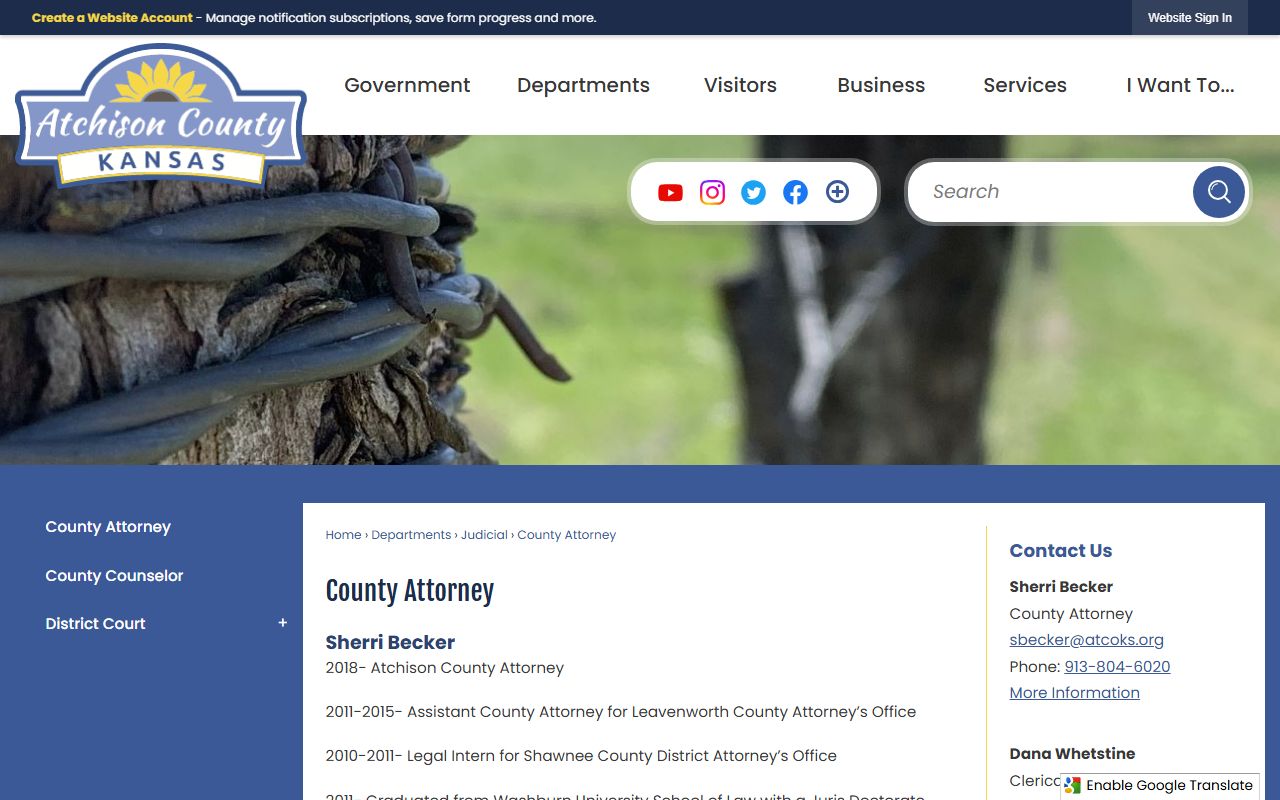
The County Attorney source is central to criminal court records because prosecutor filings determine the formal charges that appear in the court case.
Search Atchison Criminal Cases
For public district court criminal case information, start with Kansas CaseSearch. The official Kansas court materials describe statewide district court case search and the Smart Search guide identifies search by case number, party name, business name, citation, case type, and case status. Atchison County does not maintain a separate county-built criminal case portal for district court cases.
- Open the Kansas district court case search and use the exact case number if it is known.
- If the case number is not known, search by defendant name and narrow by case type or status where the portal allows it.
- Review the docket entries for charges filed, hearing events, plea activity, disposition, sentencing, probation, warrants, and payments.
- Use the courthouse terminal or Clerk of District Court if the online record is incomplete, older, restricted, or needed for certified copy use.
- For city ordinance or municipal traffic charges, contact the City of Atchison Municipal Court rather than assuming the case is in district court.
A criminal case lookup is not the same as a criminal-history report. Kansas has separate offender, registered offender, and law-enforcement repositories for other purposes, but this page focuses on the court case file. For a closer look at charge labels after arrest and how charges can change before disposition, see the Atchison County arrest records and court charges page.
Atchison Criminal Case Flow
Criminal court records make the most sense when read as a sequence. A jail entry may show custody status, but the court file shows the prosecution and court action. The Atchison County jail roster research warns that charges and bail may change after court appearances. That is why a roster entry should be verified against CaseSearch or the Clerk of District Court when the formal case record matters.
Case flow: Charges Filed › Arraignment › Pretrial / Motions › Plea or Trial › Disposition › Sentencing
| Stage | What Happens |
|---|---|
| Charges filed | The prosecutor files a complaint or information that states the alleged offenses and counts. |
| Arraignment | The defendant is brought before the court, charges are addressed, and a plea may be entered. |
| Pretrial / motions | The parties file requests, address evidence, discuss bond, and prepare for plea or trial. |
| Plea or trial | The case resolves by plea, diversion, dismissal, or trial verdict. |
| Disposition | The docket records the outcome, such as convicted, dismissed, diverted, or acquitted. |
| Sentencing | The court orders jail, prison, probation, fines, costs, restitution, or other terms when there is a conviction. |
Atchison Criminal Record Fields
An Atchison County criminal court record should be read field by field. The case number identifies the file. The court and case type show jurisdiction. Party and attorney lines show who is involved. Docket entries show what happened and when. The disposition and sentence show how the case ended and what the court ordered. Some financial fields can show costs, fines, restitution, bond, or payment plans.
| Field | What It Shows |
|---|---|
| Case number | The Kansas district court identifier used to search, cite, and request the criminal case file. |
| Court | Atchison County District Court / 1st Judicial District for state criminal matters. |
| Defendant | The person charged in the criminal court case. |
| Prosecutor | The state or county attorney role connected to the criminal filing. |
| Charges | The alleged offenses, counts, statute references, and any amended or dismissed counts shown in the file. |
| Bond | Release conditions, bond amount, or related warrant activity when public. |
| Plea | The defendant's formal response, such as guilty, not guilty, no contest, or diversion-related activity. |
| Motions and orders | Requests from the parties and written decisions or commands from the judge. |
| Disposition | The outcome, such as dismissed, convicted, diverted, acquitted, or otherwise resolved. |
| Sentence | Jail, prison, probation, fines, costs, restitution, treatment, or other ordered terms. |
| Financial obligations | Court costs, fines, restitution, payment plan, or other balances when public. |
Charges vs Convictions
A charge is an accusation filed in court. A conviction is an outcome after a guilty plea, no contest plea accepted by the court, or trial verdict. Atchison County criminal court records can show charges that were amended, reduced, dismissed, diverted, or resolved without conviction. The distinction matters because a person may be named in a criminal case without being convicted of every listed count.
| Point | Charge | Conviction |
|---|---|---|
| Meaning | An alleged offense filed by the prosecutor. | A final finding or accepted plea that establishes guilt. |
| Timing | Appears near the start of the court case and may change. | Appears after plea, verdict, or disposition. |
| Record effect | May remain visible as part of case history unless restricted. | Can lead to sentence, probation, fines, restitution, or later expungement issues. |
| Verification | Check CaseSearch, docket entries, and formal filings. | Check disposition, judgment, sentencing, and clerk copies. |
For broader noncriminal case access and copy procedures, use the Atchison County court records page.
Read Dispositions and Sentences
Disposition is the court outcome. In a criminal case it can show whether a charge was dismissed, diverted, resolved by plea, resolved by trial, or ended in another court action. Sentencing is the penalty phase after conviction. A sentence can include confinement, probation, court costs, fines, restitution, treatment terms, no-contact terms, or other orders that the judge imposes.
Read the disposition with the charges. One count can be dismissed while another count ends in conviction. A case can also show diversion, which is not the same as a conviction in all contexts, but it can still appear in court records and can be relevant to later expungement. When the docket line is unclear, the sentencing order or journal entry is the document that may provide the best answer.
Note: A docket result can show a case outcome, but certified proof requires a clerk-issued copy.
Sealed vs Expunged Records
Kansas law treats sealed, confidential, and expunged criminal records differently. Sealing restricts public access by court order or statute. Expungement is a petition process under K.S.A. 21-6614 for qualifying convictions, arrest records, and diversion agreements. Once an expungement is granted, public access is limited, but certain official uses and disclosure exceptions may remain.
| Point | Sealed | Expunged |
|---|---|---|
| Main effect | Public access is restricted by law or court order. | Public access is limited after a successful statutory petition. |
| How it happens | By confidentiality rule, statute, or specific court order. | By filing an expungement petition in the court connected to the case. |
| Examples | Juvenile, adoption, mental health, protection, or redacted personal data. | Eligible convictions, arrests, and diversion agreements under Kansas law. |
| Official access | Some parties, agencies, courts, or law enforcement may still have access. | Some agencies and legal settings may still require disclosure or allow access. |
The Kansas expungement statute is the controlling source for qualifying convictions, arrests, and diversion agreements.
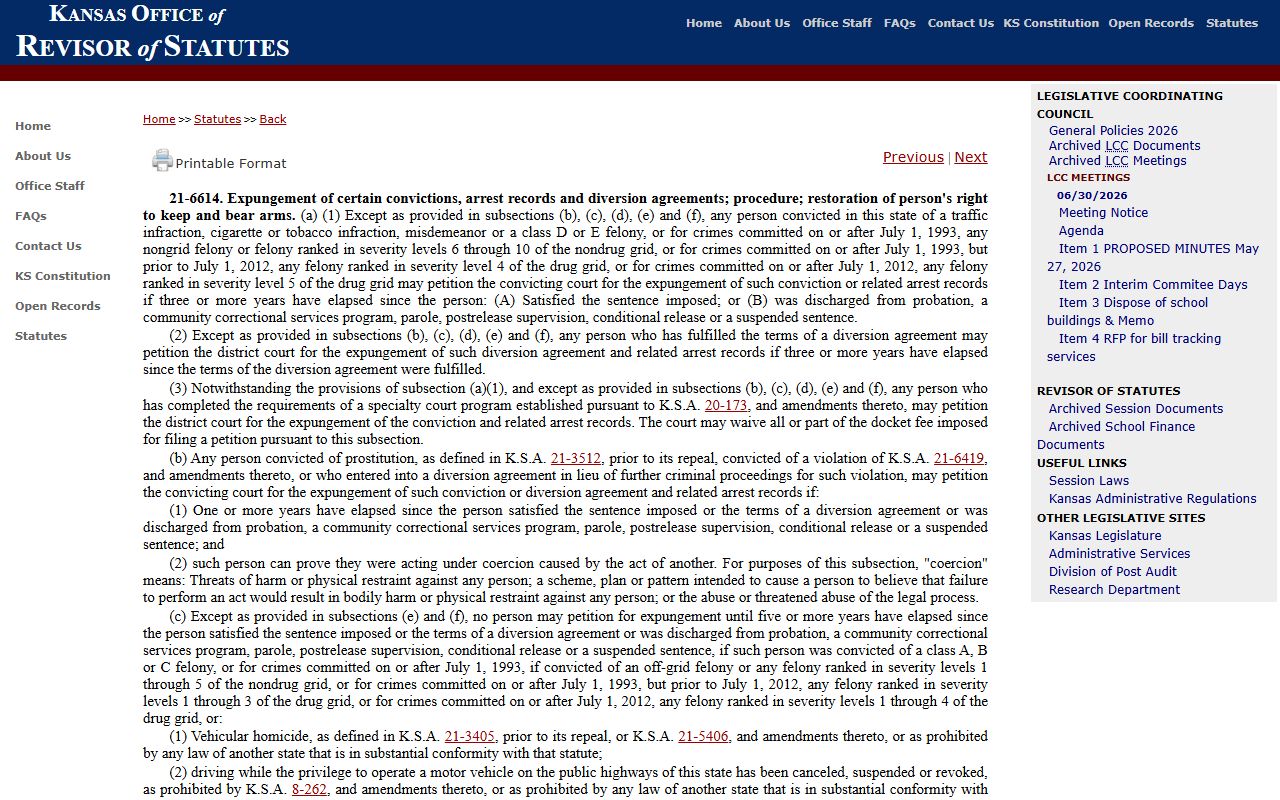
The expungement statute image connects the criminal record access issue to the Kansas law that limits public access after a granted petition.
Access Atchison Criminal Records
Kansas public access starts with the principle that public records are open unless a law says otherwise. K.S.A. 45-216 states that policy, K.S.A. 45-218 covers inspection requests and refusals, and K.S.A. 45-221 lists exemptions. For Atchison County criminal court records, the practical access chain is CaseSearch, courthouse terminal, and Clerk of District Court.
K.S.A. 45-221 is especially important because criminal files can include exempt or redacted content.
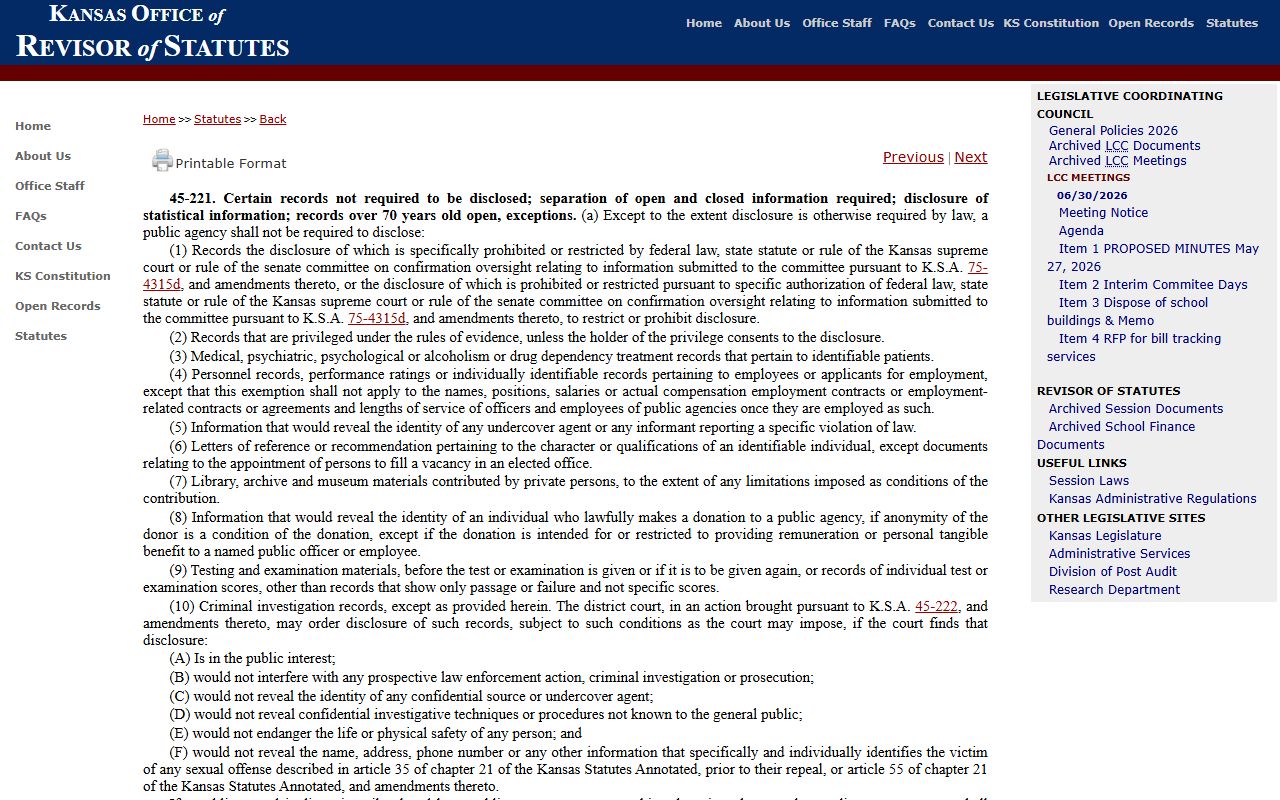
The exemption source explains why a public criminal case may exist while certain documents, identifiers, or related records remain unavailable.
Juvenile Criminal Record Limits
Juvenile information is one of the clearest limits on public criminal court record access in Kansas. K.S.A. 38-2310 makes juvenile intake and assessment records confidential except as law allows. K.S.A. 38-2326 restricts public dissemination of juvenile offender information. That means a juvenile-related Atchison County criminal record search may show less than an adult case, or may require court authorization or statutory access.
K.S.A. 38-2326 is the juvenile offender information statute used for this access limit.
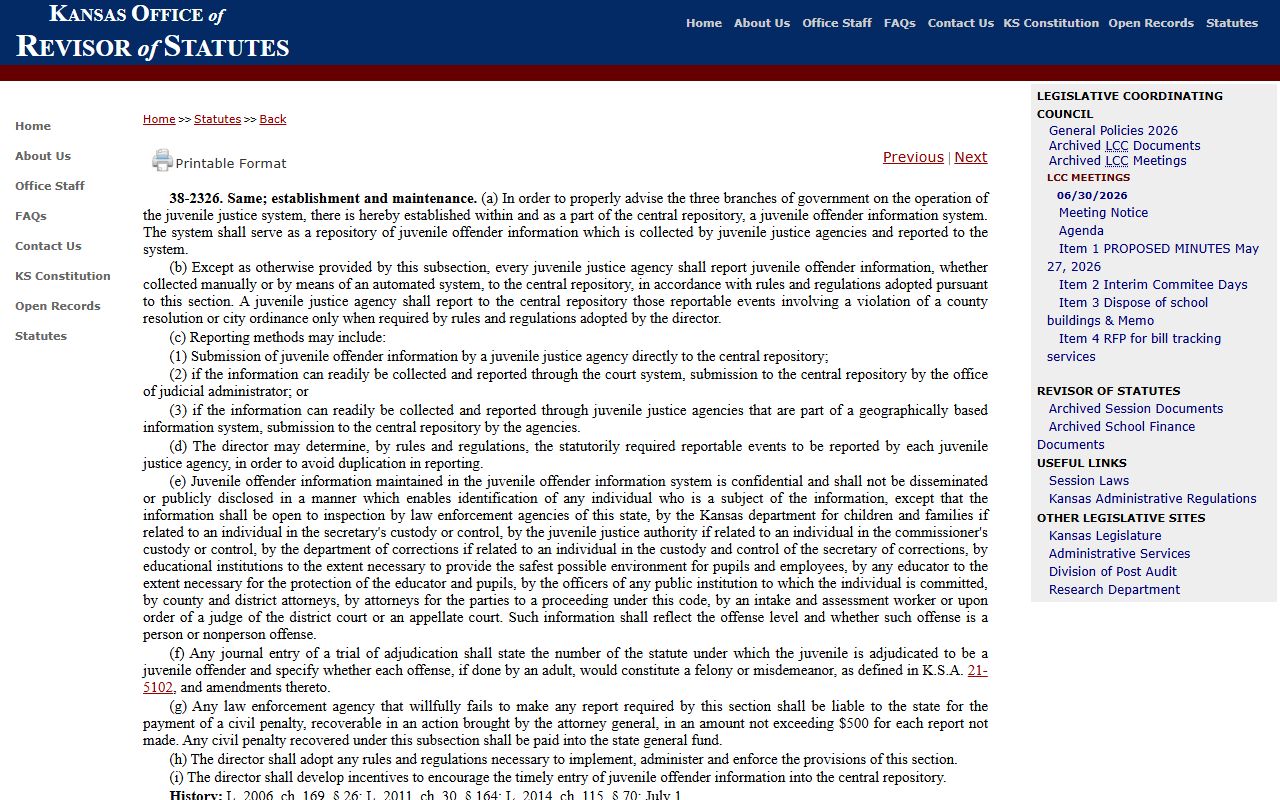
This juvenile confidentiality source supports the warning that juvenile criminal matters should not be treated like ordinary public adult cases.
K.S.A. 38-2310 separately addresses juvenile intake and assessment confidentiality.
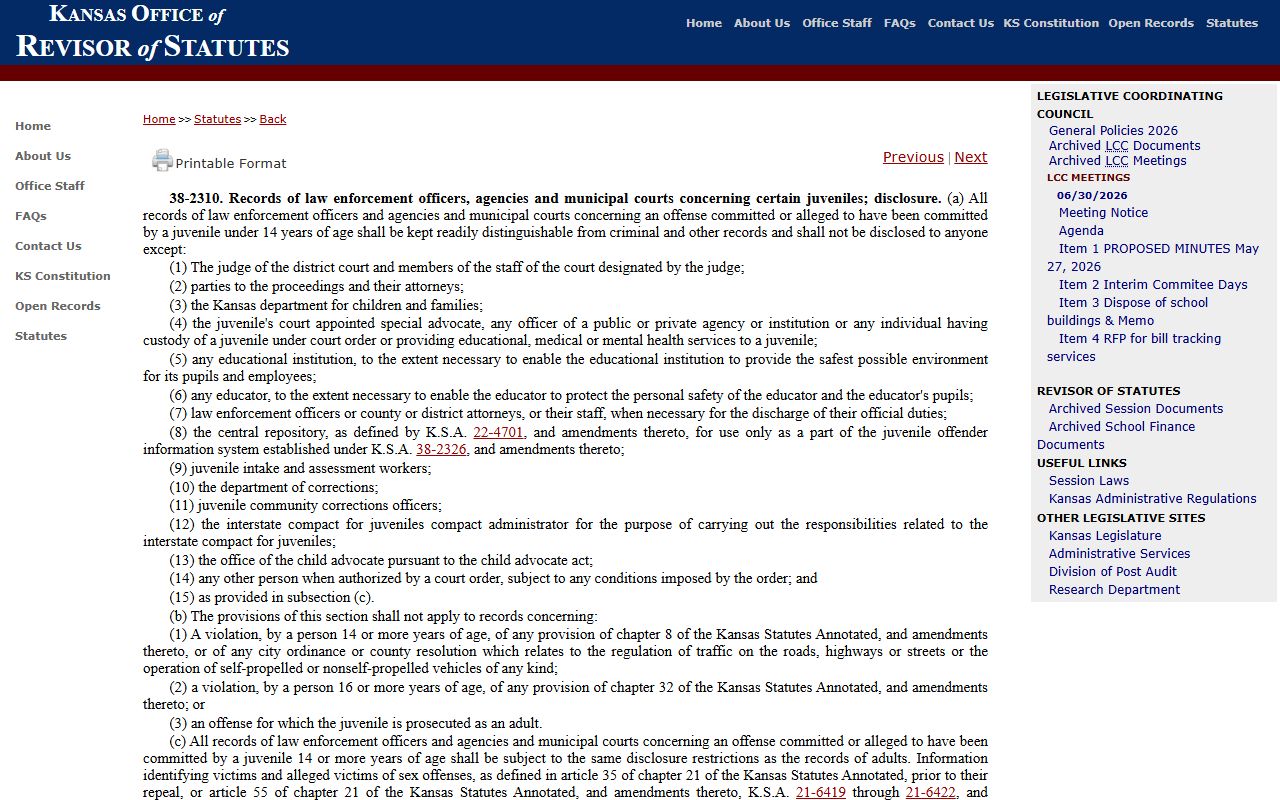
The intake statute adds another layer to the access limits that can apply before or alongside a juvenile court case.